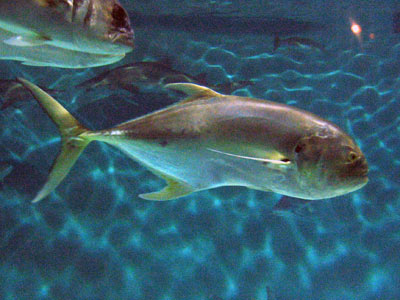
The Jack fish or Jack Crevalle is characterized by their beautiful color of bluish-green to greenish-gold on their backs. These fish also have silvery or yellowish bellies. Its soft dorsal fin and anal fins are almost identical in size and it has a prominent black spot on the gill cover and black spots at the base of each pectoral fins. There are no scales on the throat of the Jack fish. This fish species can grow to nearly 60 pounds. Species similar to Jacks are the Caranx.
Jackfish Habitat
Jack fish or Jacks can be found in both inshore waters and the open sea. They tend to show up anywhere and everywhere but most of the time in places where there are lots of food or baitfish. Jacks often travel into fresh or brackish waters and are often seen in springs that lead to the ocean.
Jackfish Traits
Jacks school by size, the largest fish forming the smallest schools. When they sight prey, often near the surface of the water, they perform remarkable slashing attacks and with such commotion that can be seen at a great distance. When they are done attacking and feeding, they regroup again for their next assault. Jacks are known to be a predatory species and are one of the most contentious bullies in the waters.
Their main food item is fish. A food study reveals that 80% of fish were found in their stomachs, 40% invertebrates, and 2% pieces of wood. They have great swimming endurance as evidenced by their red flesh and falcate tail fin. Jacks also tolerate a wide range of salinities.
Florida Bill Fish- the Marlin, Sailfish, Sword Fish, Spear Fish and Saw Fish
In fishing, it is extremely important for anglers to know what types of fish there are in a certain location, like Florida. While tuna is one of the most abundant species in Florida, there is also another species of fish that thrives in the Florida waters just as much. These other species are known as bill fish.
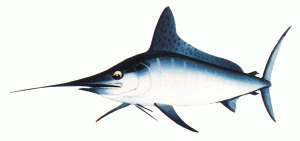
Bill fish is a common term applied to large predatory fish that are known for typically being large in size with long sword-like bills. Some of the most popular bill fish that have been identified include sailfish and marlin. In addition, these species can be found in the migratory, pelagic, and all oceans.
In Florida, however, there are specific species that are found in abundance in its waters. Some of the bill fish found in Florida includes the following:
Sailfish –is a bill fish that is blue to grey in color and has an erectile dorsal fin which stands for its sail.
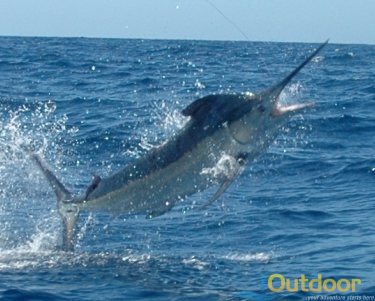
Blue marlin – also known as the Atlantic blue marlin, is a popular game fish and has high fat content.
White marlin – is an elongated fish with an upper jaw that forms a spear and has dark blue to chocolate-brown color.
Striped marlin – a species of marlin known to be one of the biggest game fish, weighing at 190 kg.
While there are other fishes that are also found in Florida, a number of anglers travel to Florida for a chance to catch bill fish since these fishes are sometimes deemed a bit aggressive and hard to capture making it more challenging for them. To catch a billfish is one of those memorable moments in an angler’s record that beats capturing the often common snappers.
Come explore a iOutdoor Fishing Adventure on your next visit to Florida setting kite on your favorite offshore species!
Catch and Release! Save the day for other Marlin fisherman to come! There is more to fishing that anglers should be and must be aware of. For those who do not yet know, recreational fishing has made a great impact on the fish population and their habitat. This impact has caused a decline of several fish species and is a problem that needs to be addressed immediately. One of the best ways to answer this problem is through the observation of conservation techniques when fishing.
Conservation Techniques:
Handle your boat properly while on the water. Fishing and boating always go together. No fishing can occur without the aid of a boat. However, when fishing in shallow waters, a boat can cause huge damage to a fish habitat. It can chop up underwater vegetation and stir up sediments that can affect aquatic vegetation.
Fishing gear, especially lost or abandoned ones can harm fish and other underwater creatures. Lost sinkers made of lead can be toxic when mistaken for food and swallowed. Discarded fishing lines can cause strangulation or starvation when accidentally swallowed for food or tangled up with an underwater creature’s body part.
Resist dumping garbage and other belongings in the water. Dirty water is poisonous and can risk underwater wildlife. Remember, whatever fish eat, you end up eating too.
Always think about the possible invasion of non-native plants or species in your local fishing spot. Before heading home, make sure to rinse off your gear and shoes. Do not use live bait if it is prohibited and do not dump extra and unused bait into the water if it is prohibited. This can cause competition between native and non-native species. In some cases, non-natives have outnumbered native species because of these habits.
When catching and releasing, make it an effort to handle your catch gently and carefully. Many fish that have been caught and released end up dying because of improper handling.
Joe Del Giorno was able to break free on his last day in port after his 270 foot Coast Guard Cutter made a last minute decision to dock at Port of Miami. After removing the second largest amount of Heroin from the ocean on Coast Guard record, we knew the fish gods where going to bring a smile to Joe at some point in the day as a reward for his great service.
The day stated with a frown however, as a storm with no end in sight decided to great us at Homestead Bay Front Park where we thought we would be leaving in search of Lemon Sharks and Bonefish on the flats. Seeing the storm on radar made our decision to head back north and change gears for Tarpon that had been holding in a few areas.
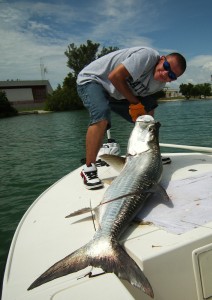
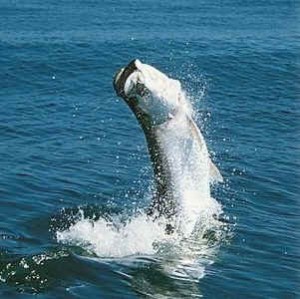
With the mullet run in full effect north of Miami, I was happy to see the start of it here in Miami with finger mullet showering near the Tarpon areas. A few spot cast with the net and we were loaded with 4-7 inch finger mullet and decided to let them jitter nervously in between rolling Tarpon. These Tarpon are generally lock-jawed and some of the hardest to catch in Miami but they could not resist the jittering and soon there was the blast of a Tarpon and the scream of the rod. With several jumps, long screaming runs and hour of Joe’s great fighting technique; we landed the monster Tarpon estimated at 120lbs. It was Joe’s largest to date and something he will never forget.
Not long after, a rod slams down and a 80lb Tarpon sky-rockets towards the boat spitting a scale free mullet at Joe and me all the while landing head first 3 feet from the boat. It was incredible and you could actually see the Tarpon as he shot under the boat and out of site into the deeper water. Next up was a 30lber that Joe was able to land in about 10 minutes and take another photo. Shortly after we decided to try another spot that had been hot and we found it to be warm. Joe quickly jumped a 75lb Tarpon that may have provided the most spectacular jump of the trip. At this spot Joe was able to catch a monster Mangrove Snapper for day time fishing on a finger mullet which we released and fun with several 5-8lb Jacks that exploded on the finger mullet.
We had some great conversations and it was a great day for Joe as he caught his largest Tarpon ever. It certainly was a pleasure to fish with someone providing such a great service to our country. I look forward to Joe’s next stop in port.
Sea Sickness is not a virus that is easily communicable. Yet, when people board ocean vessels or cruise ships, sea sickness is felt by majority of the passengers who have not come prepared.
What is Sea Sickness?
Sea sickness is a type of motion sickness caused by a disturbance in the vestibular system as it relates to the visual and proprioception systems of the brain. The vestibular system is the balance system found in the inner ear. Sea sickness is caused by the constant rocking motion of an ocean vessel, triggered by many factors such as focusing on close work, working in an enclosed environment, or bad smells.
Best Medications
There are a variety of medications used to prevent sea sickness. These are usually over the counter drugs which individuals can purchase freely. Among the best medications for seasickness are those that contain Meclizine, Bonine, Dramamine, and Scopolamine. These can be available in tablet or patch form.
These medications work by preventing nausea and vomiting induced by motion. These medications target the balance system of the inner ear, the vestibular system, in order for passengers to be able to perceive less the rocking motion of a vessel. It is recommended to take the medicine an hour before travel in order for it to work in time. If taken upon the start of travel, some people will find that they are still getting sea sick.
Other forms of seasickness medications include patch and wrist bands. Patches work as effectively as pills. Wrist bands, however, are used for patients who get motion sickness post-chemotherapy treatment and are not meant for sea-sickness or motion-induced sickness during ocean travel.
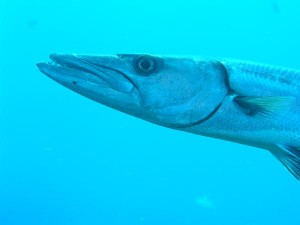
The Barracuda is a salt water fish belonging to the genus Sphyraena in the family Sphyraenidae. It can be found in tropical and subtropical oceans worldwide. It can be described as a ray-finned fish and is known for its large and fearsome appearance. It possesses a long body, fairly compressed and is covered with small, smooth scales. Some of the species can grow to a length of 1.8meters and 30 centimeters in width. This species is a nocturnal creature.
Habitat
Barracudas can be found in warm, tropical regions. They can also be found in more temperate areas. They can be found near the surface of the water but have been seen in depths of 100 meters or around 90 feet.
Demeanor
A group of barracudas is termed as a battery. These species is voracious and opportunistic predators which rely on surprise and short bursts of speed in order to overtake their prey. Barracudas are usually solitary when they reach adulthood. However, young and half-grown fish frequently congregate. They prey primarily on fish, even those as large as themselves, and attack by tearing off small chunks.
Habit
Barracudas are known to be bold and inquisitive. They may even be dangerous to humans. They have been known to inhabit open waters and bay areas in the shadow and under floating objects. This fish is attracted to things that are silvery in color and have a high reflection similar to the fish they eat. This explains why some of the human attacks made by barracudas are on those wearing earrings, bracelets, or those wearing something shiny.
One of the most memorable challenges anglers all over are bound to take is to tackle the Silver King or the tarpon in the waters of Florida. The Megalops atlanticus is commonly known by the name Tarpon. Anglers flock from different parts of the world to fish in Florida because it is here that many great numbers of Tarpon migrate.
Tarpons up Close
There is little known about the Tarpon because it has no food value compared to other fish. What is known about the Tarpon, however, is that these are prehistoric animals dating back as far as 100 million years. Tarpons also possess a unique organ called the swim bladder which enables them to breathe from the atmosphere. Tarpons, in their early stages of life, typically stay in shallower waters. However, once they grow to about two feet, they move to larger bodies of water. Tarpons are usually found in deep, man-made canals and holes far up the coastal rivers of Florida and in the upper reaches of large bays.
Never go out tarpon fishing unprepared and without any foreknowledge whatsoever. What are being caught are not little fishes but giant ones that can actually exhaust any novice fisherman. The key to successful tarpon fishing is to find northbound schools on the beach. This situation usually presents itself after the first full moon in June. Compared to southbound tarpons, northbound tarpons are hungry and are more likely to stop for bait.
After the right type of tarpon is found, proper presentation and good bait is all that is needed to make the catch. Anglers should distance themselves from their targeted tarpon from a 50-foot gap. With tarpon fishing, overcasting is always a good idea. Next is to land the bait in just the right depth. The bait should be thrown so that it would sink around 8-10 feet just barely above the tarpon’s head and line of sight. Remember, tarpons are easy to spook fish. Once a tarpon is spooked, anglers risk losing not just one tarpon but the whole school of them. Lastly, when a tarpon hooks on to the bait, anglers should most definitely hold on.
For novice fishermen or anglers new to tarpon fishing, Florida offers many tarpon fishing charters. With their help, visitors will be guided on the right equipment, the right fishing technique, and as well as the right bait to use for successful inshore tarpon fishing in Florida.
Florida boasts of having over 8,000 miles of coastline as well as 4,500 miles of inland waterways. With this much water for cruising, it is no wonder that boating is such a popular sport in the state. Many boaters often find themselves cruising over Florida waters and its waterways for the sheer beauty of it. Many types of boats have graced the waters of Florida ranging from mega-yachts to wooden skiffs. In Florida, owning a boat is as normal as owning a car.
Florida Waterways
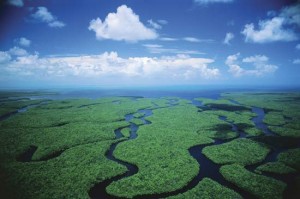
The wonders of boating in Florida are further enhanced with its waterways, passages where boats can pass through for maximum boating experience. There are many waterways maintained by the Florida Inland Navigation District, the two most common and popular are the Intracoastal Waterway or ICW and the Okeechobee Waterway.
The ICW is also known as “the ditch” and is a natural but dredged channel. This channel extends 500 miles down the east coast of Florida to the tip of the Keys. This is a very popular boating route because it runs through rivers, creeks as well-dredged canals, giving boaters an extremely great variety in boating experience.
The Okeechobee Waterway, on the other hand, is composed of 135 miles of boating route. Extremely popular during the summer, this waterway runs along the St. Lucie Canal from Stuart, across the lake, then on to Sanibel Island via the Caloosahatchee River.
Just as cars park in a parking lot, boats do so as well but in ports. Boats aren’t just anchored anywhere. There are many great places to anchor in New Smyrna including across Ponce Inlet in front of sandbar of the Island; the anchorage in Boca Chica Harbor; and the bayside by Sand’s Cut. Brevard County also has a great place to anchor such as sand Island across New Smyrna Inlet.
Boating Rules and Regulations
It is recommended that before purchasing a boat or even before boating in Florida, especially for those new in the area, to get acquainted with the state’s boating rules and regulations for a safe and legal boating experience.
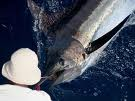
Now, this is a swordfish! This sword was taken off the coast of Massachusetts with an electric harpoon while giant tuna fishing. These fish are deep, and giant tuna alike, gorge themselves on sardines and krill, and when satiated rise to the surface and layout while they digest their massive meals. It is possible to approach these monsters while they are lying out and harpoon them on the surface, and then quickly kill them by an electric shock to keep the quality of meet at its peak. By using an electric shock and harpoon the fish dies quickly and eliminates the lactic acid buildup in the meat that would normally occur during the titanic struggle they put up if caught on just hook and line – a quick kill ensures the best quality tuna which is flown to Japan and sold in the world’s largest tuna markets- some fish bringing as much as $10,000!
It is not unusual to find giant tuna and swordfish together in one area- during these feeding opportunities whales, tuna, sharks, and swords along with other predatory fish will be on station to get their share of the bounty!
The boats used in tuna fishing using the method of electric harpoon are unique as well. The vessel has a bow pulpit 30 feet long and just wide enough for a man to make his way out to the end here with the help of the mate high up in the crow’s nest, which extends some thirty feet above the water, he spots the fish laying out on the surface. A rope is tied to the harpoon and then to a big float so that if the fish is not killed directly and runs it can take out the line and buoy until it tires and is picked up later.
Unfortunately, this Captain suffered an unforeseen consequence linked to the sad day 911- he had several large tuna on board, one valued at over $10,000, not knowing that 911 had happened he made his way back to port to prepare the fish to be flown to the tuna markets in Japan, unfortunately, there were no planes flying and the catch had to be sold on the local market at pennies on the dollar.

 Jackfish Habitat