Florida Matanzas Inlet Redfish Fishing has been at its finest. All species of fish are gearing up for the warm summer months. In this process, Inshore Red Fish are becoming more active in the inlets. Matanzas Inlet is very productive fishing hole currently.
Captain Steve and Chris are highly knowledge guides for this area. They have been actively searching out waters and catching quality Red Fish.
Sight fishing these amazing, hard fighting fish is some of the most exciting techniques to catching the Reds. The Captains are paying close attention to where the bait fish are moving as the Red Fish will surely follow. You really have to stalk out the school by watching for ripples or fins on the surface of the water.
Palm Coast is beautiful this time of year. Many people love to sight see and explore the inshore flats. Part of the inlet is an aged set of Cannons. It is a landmark that is unique to this part of Florida.
The Matanzas Inlet is a channel in Florida between the barrier islands connecting the Atlantic Ocean and the south end of the Matanzas River. It is not stabilized by jetties and has constantly shifted over the years.
If you ever get a chance to visit Palm Coast, experience a trip that can provide information and knowledge of the local landmarks.
Come Catch Yours Today with Captain Steve Niemoeller on the St. John’s River.
If you enjoyed this report with Captain Steve Niemoeller, you might also enjoy a fishing report from the same area.
Snook are strictly regulated to protect it from overfishing. Catching them requires a license, permit, they must be within range of a certain size, the bag limit is one a day, you’re only allowed to keep them in season and they are not allowed to be sold or bought. So your only way of having some is to grab your gear and get out on the water.
Many say its all worth it for an amazing seasonal treat. Snook is a delicious sport fish, ask almost anyone that has tried a bite. They will normally reply that it was one of the best tasting fish that they have ever had. The meat is white, with medium density and a mild subtle taste.With countless recipes online a quick search will bring up a plethora of options to choose. remember to remove the skin or your gonna have a bad time. Anyways a favorite among many is the deep fried fish method. But which every way you like to prepare them this is definitely a tasty fish unless you don’t take the skin off then its not.
Snook can be found in south and central Florida mostly inshore brackish and coastal waters. they can also be found along man made structures mangroves, and shorelines and Large schools form in summer for spawning.
“Fishing has improved along Florida’s Space Coast. During the past few days, calm conditions and warmer temperatures have allowed anglers several opportunities to catch some nice fish throughout our region. To begin with, several nice speckled trout have been caught in both the Indian and Banana Rivers. Live shrimp or small scented jerk baits rigged under a popping cork has worked well during the mid-morning hours. When targeting trout, anglers can expect these fish to feed near sandy potholes in 2-4 feet of water. Anglers should keep in mind trout can be easily spooked at times. Making long casts while drifting can help increase your chances of catching a nice fish,” reports Capt. Keith Mixon of Mixin’ Work With Play Fishing Charters for this Mosquito Lagoon Fishing Report.
“A few slot size redfish have also been caught in the northern end of the Indian River. Sight casting to them has worked best during calm conditions. Live shrimp or Bass Assassin’s four inch Saltwater Assassin’s Shrimp Cocktail in Houdini or Drunk Monkey color has worked well when rigged weedless. The key to hooking up with one of these redfish is to fish the bait as slowly as possible,” Mixon reports.
“At the port, a few tripletail have been caught along the Canaveral buoy line as well as floating structure. A free lined shrimp has been the bait of choice for these hard fighting fish. Sight casting is the best way to catch them when conditions are calm during mid-day. Some of these fish have measured up to 22 inches in length,” Mixon reports.
Our Mosquito Lagoon Fishing Report allows you access to understand how the fish are moving and where you can catch Redfish. The Cape Canaveral Area is one of the best Redfish destinations in Florida. Inshore Fishing dominates and this is the perfect reason why. These river systems that make up the Lagoon provide ample fishing territory to enjoy an amazing fishing trip. Bring along your friends or families for an adventure of a lifetime on an New Smyrna Beach Fishing Charters.
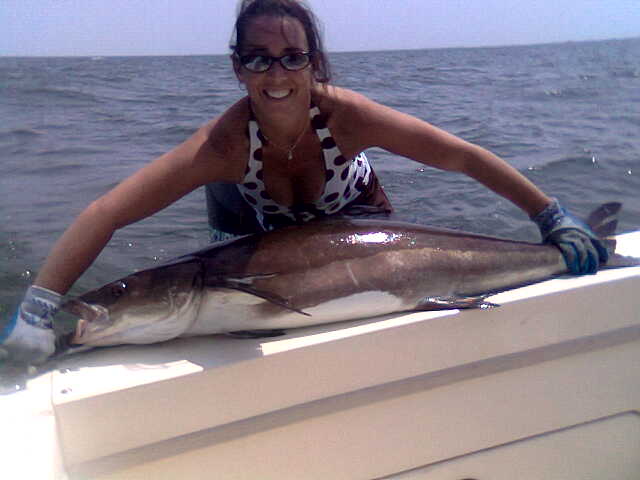
The Florida State Record for Cobia is 130 lb 1 oz and was caught near Destin. No wonder New Smyrna is one of the Cobia Capital of the World! Imagine a fish of that size! Cobia is some of the strongest fighting fish because of their beefy muscular makeup and their innate tenacity. The Cobia is a powerful fish and a thrilling catch and is one of the most sought after game fish and once hooked the thrill really begins with the line coming off a screaming reel and the angler unable to do anything but hang on! Cobia is considered an inshore/nearshore species and sight fishing is the best method to find these tasty brawlers and works even better if your vessel is equipped with a tower or raised platform. Cobia can be found in all waters off the coast of Florida and down into the Keys.
The appearance of the fish in local waters is temperature driven and most Cobia anglers start watching the water around mid-March for the fish to show up. Cobia is generally found in nearshore and inshore waters with inlets and bays – the fish like structure and are frequently found around buoys, pilings, and wrecks in these areas. Cobia spawns in spring and early summer and can be found throughout the summer months. Experienced Cobia anglers will look for turtles, manta rays, and floating debris to find Cobia- the fish enjoy the easy pickings from the rays as they dig up the bottom foraging for their own dinner.
Cobia is a versatile game fish caught on fly and spinning tackle both. They can be found in offshore waters, nearshore waters, and on the flats. So no matter what your equipment, type of boat, or level of experience there is A COBIA IN YOUR FUTURE!
Best bait and tactics for catching Cobia.
The BEST TACTIC for hooking and catching Cobia it to BE PREPARED! Cobia has a reputation for being extremely finicky when it comes to living baits and lures so have several rods baited and standing by with a variety of offerings. Cobia frequently travels in at least pairs and sometimes threesomes – have several stout rods rigged and ready to go at the fish opportunity. Live crabs and small fish are good bait for cobia but eels and live pinfish and a variety of artificial baits work well especially bucktail combinations with plastic tails. My favorite bait for cobia is an artificial eel made of surgical tubing with a lead sinker at the head.
Live baits for cobia include spot, menhaden, mullet, minnows, perch, eels, shrimp, crabs, and clams. These use of these live baits vary with season and location and the only experience can tell you what to use and when. Keep bait near the surface or, if cobia are deeper, add just enough weight to get the bait down and still retain its movement. Medium to heavy tackle is generally a good idea to land these fish that average 30 pounds and as every true Cobia hunter knows can easily go over 60 pounds. Fishing for cobia along pilings with a weighted eel is a favorite tactic of experienced anglers.
Cast the reel so it drops alongside the pilling and drops down- if you don’t get a strike the first time keep trying until you have covered all angles before moving on.
Good recipes for cooking and eating Cobia.
A word of caution, Cobia is a tough hard fighting fish, and large specimens when gaffed and boated have caused anglers to lose equipment, be injured, and have damaged boats. Have a plan when you get that fish over the side- have a fish box open and ready and the decks cleared so you can easily in one coordinated move land the fish and move it to the fish box.
Cobia is excellent table fare and is also great raw for sushi or sashimi. It can also be used as a replacement for fish such as tuna if people are looking for an environmentally sustainable alternative, as the texture and flavor are quite similar. Did you know that Cobia grows three times as fast as salmon and has been commercially produced in Asia, particularly in Taiwan where it is stocked in about 80% of ocean cages? Here are a few good Cobia recipes to try out- but nothing can beat a hot charcoal grill and a little Italian seasoning splashed on top!
Lemon Butter Cobia
Ingredients: 1 lb. cobia steaks 1/2 fresh lemon 1 tbsp. butter 1 tsp. olive oil 1/2 tsp. Old Bay crab seasoning or equivalent
Instructions: Preheat oven to 400 degrees.
Drain steaks and lay in a casserole dish coated with olive oil.
Squeeze lemon juice over steaks, coat with butter, and sprinkle with seasoning.
Bake for 10 minutes or until fish is white on the outside and still slightly pink in the center.
Baked Cobia with Italian Herbs
Ingredients
1 lb. cobia steaks 1 cup crushed bread crumbs 3/4 cup grated parmesan cheese 1/4 cup chopped fresh parsley 1 teaspoon salt 1/2 teaspoon pepper 1 teaspoon paprika 1/2 teaspoon fresh oregano 1/2 cup melted butter
Directions:
1. Rinse fillets and allow to drain in a colander. If necessary, blot away excess water with a paper towel.
2. Mix the dry ingredients together in a bowl.
3. Dredge fillets in butter and roll in dry season mixture. Place fillets on a greased cookie sheet.
4. Bake at 375-degrees for approximately 15-20 minutes. The fish is cooked when it is white and flakes easily
‘This is a big fish! This is a big fish! This is a big fish!” It was all Jim from Delaware could yell as his drag smoked and rod arched over underneath the power of a giant redfish screaming across the shallow grass flats.
Jim along with his new fishing buddy Al Iodice of New Hampshire had already fought and boated over a dozen big redfish on the spectacular morning of fishing in the Mosquito Lagoon near Titusville, Florida, most weighing between 10 and 15 pounds. However, the beast now being battled was an all-together different class of ‘big’.
Before the sudden chaos could completely grip the situation, Capt. Rocky quickly released the hydraulic Power Pole, grabbed his graphic push pole, manned the poling platform, and began chasing down the big red beast.
Thirty minutes later, after thirty more shouts by Jim and thirty laps spun around the flats boat by Al with landing net in hand and thirty minutes of hard pushing by the captain while interspersing blurbs of instructions and bursts laughter, the 30 pounds, big bronzed beauty was finally aboard.
Afterward, with arms aching, an adrenalin-drained Jim could be heard muttering, “That was a big fish.” (Pictured below are Jim and Al smiling broadly with one really ‘big fish’.)
Snook are fish that live either in saltwater or fresh water. Tricky to catch, Snook are still much sought-after because of their delicious meat and the challenge of catching one. Like most fish, Snook are cold blooded animals. Thus, they rely on the water temperature to regulate the temperature of their bodies. Cold temperatures are detrimental to the health of this fish species and sudden drops in temperature can be deadly. Thus, Snook have to migrate to warmer waters such as Flamingo in the Florida Keys when winter begins.
The migration patterns largely depend on where they are currently located, what temperature that location has, and in what direction is the warmer body of water. Snook migrating through the waters of Florida follow an east to west pattern, as opposed to the usual north to south that many fish species do.
Snook can easily move from freshwater to salt water and vice versa. Those who have observed them swim upstream say that they stay close to the center of the water body – be it a large river or a small creek. Also, Snook love to travel during day time.
The problem with migrating Snook is that they ignore your bait, most of the time, no matter how delicious it might be. They are also easily spooked so fly fishing for Snook can be frustrating. In fact, Snook are the most difficult to catch when they are migrating. Still, if you try to be as subtle as you can, you’d probably be able to entice one to take your bait.
Snook Fishing in Florida:
Snook Fishing in Florida in the ultimate inshore fishing experience. You truly can’t beat the action especially once the snook move in during their migrations. Most of the migrations are due to mating and that search for warmer weather. Summer months are the most productive months to catch them but also the time of year that you can’t harvest them. According to FWC, Dec. 15- Jan. 31st and June 1st- Aug. 31st seasons of harvest are closed.
September 1st brings about one of the most incredible times to go Night Fishing in New Smyrna. Inshore Fishing for these elusive beasts will be one of the most action packed fishing adventures of your lifetime!
After a good day at sea, and coming home with your prized catch, the next step you should do is preparing your fish. However, for many anglers, preparing a catch is a gruesome task because not only can it be difficult especially to beginners but can also take time. Truth is, with the proper technique, preparing a catch should be one of the most satisfying parts of the whole fishing expedition. In this endeavor, the importance of a sharp fillet knife cannot be gainsaid since it makes fish preparation not only faster but more effective. The secret then to the best fillet is keeping the fillet knife always sharp for perfect use every time.
Why Sharpen Your Knife?
Using a blunt knife will not only make your task of preparing your task more difficult, it will also make your work unsightly since the cuts you would make are not clean. More importantly, using an unsharpened knife will only open you to accidents as you might apply too much pressure and inadvertently cut something other than fish meat. Learning how to sharpen your own knife will also help you economize, and prevent you from buying knife after knife whenever its edge blunts.
Sharpening Tips
When you sharpen your knife with a quality stone, the idea is to remove the metal from the edge to form a new edge. At a 20-degree angle and lubricated with water or oil, you could draw the blade around the stone in a circular pattern or across and down. Because friction against the stone causes the knife to have a feathered edge, you also need to hone it or straighten the roughened edge.
Maintaining Sharpness
Even though you regularly sharpen your fillet knife, its sharpness still depends on certain factors. If you want a sturdier knife, choose one made of raw steel as stainless steel, although may be easier to sharpen, dulls more easily.
The proper use and storage of fillet knives also lengthens their life spans. When using your fillet knife, remember that it “fillets” not “cuts”. Avoid exerting too much force on the fish meat, but simply allow the knife to slice smoothly through flesh. Also don’t use it on any other meat or thing but only fish. Lastly, after using, wash and dry it thoroughly, always keeping it safe in a clean, dry place after use every time.
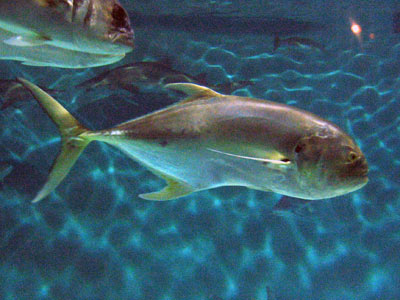
The Jack fish or Jack Crevalle is characterized by their beautiful color of bluish-green to greenish-gold on their backs. These fish also have silvery or yellowish bellies. Its soft dorsal fin and anal fins are almost identical in size and it has a prominent black spot on the gill cover and black spots at the base of each pectoral fins. There are no scales on the throat of the Jack fish. This fish species can grow to nearly 60 pounds. Species similar to Jacks are the Caranx.
Jackfish Habitat
Jack fish or Jacks can be found in both inshore waters and the open sea. They tend to show up anywhere and everywhere but most of the time in places where there are lots of food or baitfish. Jacks often travel into fresh or brackish waters and are often seen in springs that lead to the ocean.
Jackfish Traits
Jacks school by size, the largest fish forming the smallest schools. When they sight prey, often near the surface of the water, they perform remarkable slashing attacks and with such commotion that can be seen at a great distance. When they are done attacking and feeding, they regroup again for their next assault. Jacks are known to be a predatory species and are one of the most contentious bullies in the waters.
Their main food item is fish. A food study reveals that 80% of fish were found in their stomachs, 40% invertebrates, and 2% pieces of wood. They have great swimming endurance as evidenced by their red flesh and falcate tail fin. Jacks also tolerate a wide range of salinities.
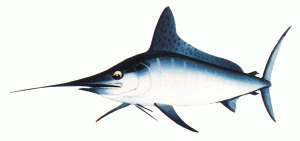
Florida Bill Fish- the Marlin, Sailfish, Sword Fish, Spear Fish and Saw Fish
In fishing, it is extremely important for anglers to know what types of fish there are in a certain location, like Florida. While tuna is one of the most abundant species in Florida, there is also another species of fish that thrives in the Florida waters just as much. These other species are known as bill fish.
Bill fish is a common term applied to large predatory fish that are known for typically being large in size with long sword-like bills. Some of the most popular bill fish that have been identified include sailfish and marlin. In addition, these species can be found in the migratory, pelagic, and all oceans.
In Florida, however, there are specific species that are found in abundance in its waters. Some of the bill fish found in Florida includes the following:
Sailfish –is a bill fish that is blue to grey in color and has an erectile dorsal fin which stands for its sail.
Blue marlin – also known as the Atlantic blue marlin, is a popular game fish and has high fat content.
White marlin – is an elongated fish with an upper jaw that forms a spear and has dark blue to chocolate-brown color.
Striped marlin – a species of marlin known to be one of the biggest game fish, weighing at 190 kg.
While there are other fishes that are also found in Florida, a number of anglers travel to Florida for a chance to catch bill fish since these fishes are sometimes deemed a bit aggressive and hard to capture making it more challenging for them. To catch a billfish is one of those memorable moments in an angler’s record that beats capturing the often common snappers.
Come explore a iOutdoor Fishing Adventure on your next visit to Florida setting kite on your favorite offshore species!

 Cast the reel so it drops alongside the pilling and drops down- if you don’t get a strike the first time keep trying until you have covered all angles before moving on.

 Jackfish Habitat